Laser hair reduction is one of the most searched aesthetic treatments in India, and one of the most misunderstood. Patients come to us after bad experiences elsewhere: burns, dark patches, or sessions that simply didn't work. Almost all of these problems trace back to the same issue: using the wrong laser for Indian skin, or operating it without proper dermatological oversight.
If you're considering laser hair reduction, here's everything you need to understand before booking your first session.
How Laser Hair Reduction Works
Laser hair reduction works on a principle called selective photothermolysis. The laser emits light at a specific wavelength that is preferentially absorbed by melanin, the pigment in hair, converting it to heat. That heat damages the hair follicle, reducing its ability to produce new hair.
The key word is reduction, not removal. No laser permanently eliminates 100% of hair. What you realistically achieve is an 80–90% permanent reduction in hair density, with remaining hair being finer and lighter. Multiple sessions are needed because lasers only affect hair in the active growth phase (anagen), and not all follicles are in the same phase at the same time.
Why Indian Skin Is Different
Indian skin typically falls in Fitzpatrick skin types III–V, meaning moderate to dark brown complexion with significant natural melanin in the skin itself, not just in hair.
This creates a challenge: the laser needs to target the melanin in the hair follicle without overheating the melanin in the surrounding skin. If the wrong laser is used, or the correct laser is used at incorrect settings, the skin melanin absorbs too much energy, causing burns, blistering, or post-treatment hyperpigmentation.
The two lasers most suitable for Indian skin are:
1. Diode Laser (810nm)
The most widely used laser for Indian skin. The 810nm wavelength offers a good balance, enough melanin absorption to effectively target the hair follicle, with less risk to darker skin when used at appropriate parameters.
2. Nd:YAG Laser (1064nm)
The longest wavelength commonly used for hair reduction. It penetrates deeper and is absorbed less by epidermal melanin, making it the safest option for very dark skin tones or tanned skin. Slightly less effective on fine hair but excellent for coarser hair on darker skin.
What to avoid: IPL (Intense Pulsed Light) is not a laser, it emits a broad spectrum of light and is far less precise. It carries a much higher risk of burns and PIH on Indian skin and is generally not recommended by dermatologists for skin types IV–VI.
What to Expect Session by Session
Before your first session:
Shave the area 24–48 hours before (never wax or thread, the laser needs the root intact)
Avoid sun exposure for 2 weeks before and after
No self-tanner
Tell your dermatologist about any medications, especially photosensitising drugs
During the session:
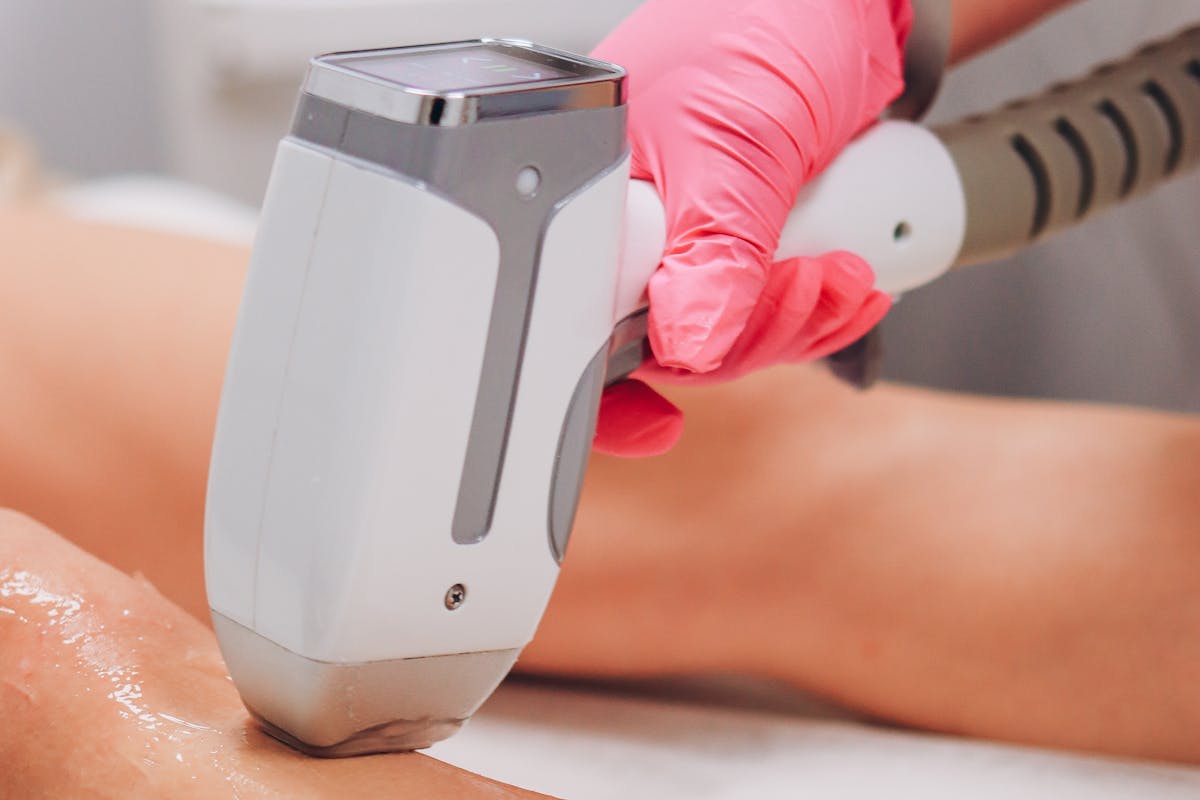
A cooling gel or built-in cooling tip is applied to protect the skin surface
Most patients describe the sensation as a warm snap, like a rubber band flick
Session duration: 10–15 minutes for underarms, 45–60 minutes for full legs
No anaesthesia needed for most areas
After your session:
Mild redness and swelling for 24–48 hours, normal
Avoid heat (gym, steam room, hot showers) for 48 hours
Apply SPF 50+ diligently
Hair "shedding" over the next 2–3 weeks is a good sign, it means the treated follicles are clearing
Sessions needed:
Underarms: 6–8 sessions
Face (upper lip): 4–6 sessions
Full legs: 8–10 sessions
Bikini: 6–8 sessions
Sessions are spaced 4–6 weeks apart
Common Questions
Is it permanent?
It's permanent reduction, not permanent removal. Most patients achieve 80–90% reduction. Top-up sessions once a year may be needed for the small percentage of remaining follicles.
Is it safe during periods?
Bikini area treatment is often avoided during menstruation due to sensitivity, but there's no medical contraindication.
Can I get laser treatment if I have PCOS?
Yes, but hormonal conditions can stimulate new follicles between sessions, meaning you may need more sessions to achieve the same result. It's still absolutely worth doing.
What about hormonal facial hair?
Laser is effective on the face, but for hormonally driven facial hair, we often recommend addressing the underlying hormonal cause alongside laser treatment.
Why Dermatologist Oversight Matters
Laser devices are now widely available at beauty salons and spa chains. The issue isn't the machine, it's who's operating it. A dermatologist assesses your skin type, chooses the right laser and parameters for your specific tone, monitors for adverse reactions, and adjusts settings across sessions. Skin type misclassification or incorrect fluence settings are the primary cause of post-laser complications in Indian patients.
At Youthville Clinic, all laser hair reduction sessions are performed under direct medical supervision, with devices calibrated specifically for Fitzpatrick III–V skin.
Your wellness journey begins in one click
Book your appointment today and experience expert care designed around you to be better

Your wellness journey begins in one click
Book your appointment today and experience expert care designed around you to be better
Your wellness journey begins in one click
Book your appointment today and experience expert care designed around you to be better
Disclaimer: The information on this website is for general informational and educational purposes only. It is not intended as, and should not be construed as, medical advice or a substitute for consultation with a qualified dermatologist. Individual results vary based on skin type, skin sensitivity, health conditions, age, lifestyle factors, and adherence to pre- and post-treatment care instructions. All treatments are performed by qualified, registered medical practitioners. For personalised medical advice, please book a consultation. Treatment charges mentioned are indicative and may vary; final pricing will be confirmed during your consultation.
Powered By TechInverted